Trail poles for running in the mountains


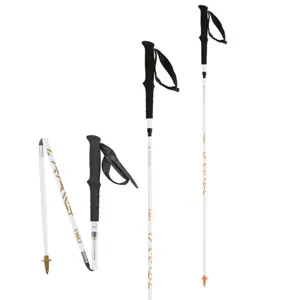


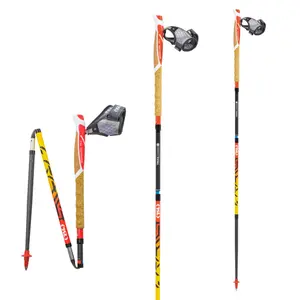
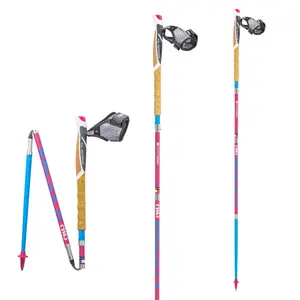
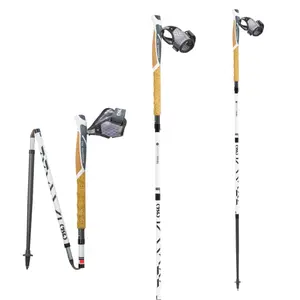
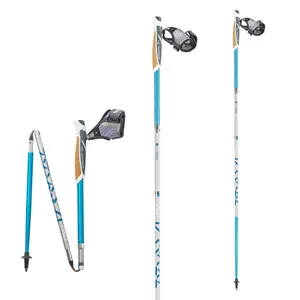

On a steep uphill, pushing with your arms relieves your thighs and helps maintain your pace. These trail poles, foldable or single-piece, are designed for mountain running: lightweight, easy to store against your bag, and available in various lengths to fit your height.
When to use trekking poles
Trekking poles are most useful on routes with a lot of elevation change. When going uphill, they help distribute the effort between your legs and arms. When going downhill, they aid in maintaining balance on slippery or unstable ground. However, on a short and flat trail, they get in the way more than they help: save them for long and mountainous outings.
Folding or fixed: two designs
The folding pole collapses into several sections connected by an internal cord, then fits into a quiver or on the sides of your bag when the trail becomes runnable again. The fixed pole, made from a single piece, doesn’t fold: it's suitable for runners who want to keep it in hand throughout the climb. The cross trail poles, also mentioned on the page, are designed for a more sporty use on varied terrain.
Choosing the right pole length
With your arms at your sides and your elbow bent at a right angle, the handle should reach your hand when the tip touches the ground. The size filter on the page shows the available lengths in centimetres. Don’t forget about the strap: if it's well adjusted, it transfers the push without you needing to grip the handle tightly.
Brands of trekking poles
Leki designs poles for trail running and hiking, with straps made for running. TSL offers folding poles for running in the mountains. Black Diamond, Guidetti, and RaidLight round out the selection for comparing weight, handles, and folding systems.
Gear to go with your poles
To store your poles during the run, a hydration pack with attachments is the most practical, and a trail belt can also carry them on shorter outings. Add some flasks and pockets for water, and a watch from the smartwatches page to track your elevation. Everything is combined in the trail equipment.
Trekking poles on sale
Closeout items go through the trail running clearance and seasonal discounts through the trail running sales. If you also hike in the mountains, the hiking sales are worth a look.
Frequently asked questions
How to store poles during the run?
Folding models fit into a quiver or the attachments of your hydration pack. Make sure your pack is equipped for this before heading out.
Hiking poles or trekking poles?
Trekking poles are lighter and collapse quickly. Hiking poles, often telescopic, are sturdier but heavier to carry while running.
Do you need poles for an ultra-trail?
On an ultra with significant elevation change, many runners take them. Check the race rules, as some prohibit their use.
How to use poles when climbing?
Plant them slightly in front, at foot level, and push down with both arms at the same time. Maintain a steady rhythm that matches your steps.
Carbon or aluminium poles?
Carbon is lighter, while aluminium bends rather than breaks on impact. The choice depends on the weight you want to carry and your use.