Hiking Sticks


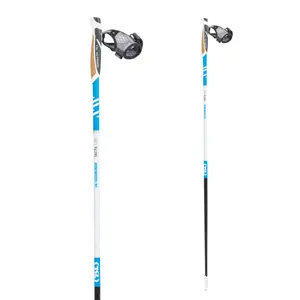
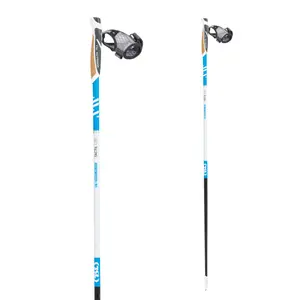


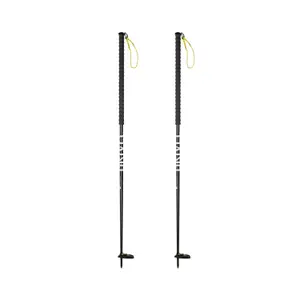

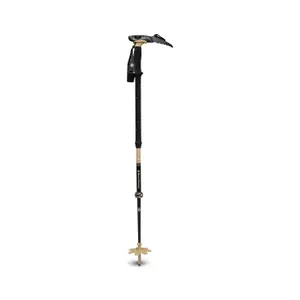


Planting the pole at the right time saves your legs on the uphill and your knees on the downhill. Here you will find hiking poles, trekking poles, and Nordic walking poles, adjustable telescopic models, ski touring poles, and the parts that go with them: tips, spikes, and grips.
Hiking, trekking or Nordic walking
The hiking pole, used in pairs, helps to maintain balance and distributes the effort between the arms and legs. The trekking pole is designed for longer use, often with a backpack loaded. The Nordic walking pole has a handle with a strap and an angled tip: it is used to push backward to move faster on flat or hilly terrain. Telescopic models can be stored on the backpack when the path doesn’t require them.
Setting the right length
On flat terrain, hold the pole tip near the ground by your foot: your forearm should be roughly horizontal, with your elbow at a right angle. When going uphill, shorten it a bit to avoid raising your shoulders. When going downhill, lengthen it to keep your torso upright and plant it in front of you. Well-adjusted straps allow your hand to rest on them without gripping the handle all the time, reducing fatigue in the forearms.
The pole manufacturers on the page
Élémenterre offers accessible poles for hiking, Black Diamond has hiking and trekking models, Guidetti makes Nordic walking poles, TSL and Leki provide adjustable poles for the mountains.
Other gear for walking
In addition to the poles, gaiters protect the ankles and keep the shoes clean, sunglasses protect the eyes at altitude, and the hydration page helps you drink on the go. For early morning starts, take one of the headlamps, and for navigation, a device from the GPS and compasses page or one of the smartwatches. The rest can be found on the equipment page.
Cheaper poles
A pair of poles is rarely replaced, but a tip or end wears out. For both, keep an eye on the hiking clearance and the hiking sales, as well as on the new arrivals.
Tips, ends and baskets
The poles come with small parts that change their use. The metal tip bites into earth and ice, the rubber tip prevents slipping on pavement and protects fragile surfaces. Baskets stop the pole from sinking into mud or snow. For Nordic walking, tips and straps are replaced when worn. The page offers replacement tips, points and straps, allowing you to extend a pair rather than change it. Regularly check the tip: when dull, it grips less on rock.
Frequently asked questions
One or two poles for hiking?
Two poles better balance the body and distribute the effort on both sides. One may suffice on easy trails.
Are poles useful when going uphill?
Yes, they allow you to push with your arms and relieve your thighs, especially on long climbs.
Can you use a hiking pole for Nordic walking?
It’s not ideal. Nordic walking requires a handle with a strap and a suitable tip for pushing backward.
How to maintain telescopic poles?
Dismantle and dry the shafts after a trip in the rain, then clean the tightening mechanism to keep it secure.
Where to find cheap hiking poles?
In the hiking clearance and the sales, where end of lines are sold off.